
1920s British crossword craze history provides dedicated puzzle lovers with an engaging, detailed perspective on why crossword continues to hold an enduring place in global culture. Whether you are taking a mindful break between workday meetings, solving during a relaxing morning commute, or winding down before evening sleep, a single puzzle session creates a welcome pocket of calm deductive clarity. Here on USA Today Crossword, our ongoing mission is to share the rich stories, structural mechanics, and practical techniques that make every round an enjoyable intellectual experience.
You can put these strategic ideas into practice immediately on the USA Today Crossword interactive board. To discover a wider universe of daily brain challenges, crosswords, jigsaws, and classic solitary card games, visit Easy Daily Puzzle or explore our full library of crossword puzzles on Easy Daily Puzzle.
1920s British crossword craze history: the story and strategic heritage of crossword
When the crossword craze crossed the Atlantic from New York to London in the winter of 1924, it ignited an unprecedented social sensation. British broadsheets like the Westminster Gazette and The Sunday Times began printing daily word grids, captivating readers across all social classes. In London, public libraries reported that dictionaries were wearing out under continuous use, prompting librarians to institute fifteen-minute limits per patron. Morning commuters on the London Underground became so engrossed in pencil solving that transit authorities issued warnings about passengers missing their stations. This whirlwind reception cemented crosswords as a permanent fixture of British intellectual life, eventually giving birth to the sophisticated tradition of cryptic wordplay.
Reflecting on the deeper principles behind 1920s British crossword craze history shows why simple games maintain such enduring power over the human mind. Behind every elegant grid, card tableau, or jigsaw layout lies an intricate balance of order and uncertainty, designed to challenge our pattern recognition and deductive faculties. When modern solvers understand these underlying principles, the game transforms from a casual pastime into a deeply satisfying mindful practice. Every round becomes an opportunity to refine your approach, test your hypotheses, and experience the quiet joy of finding the right move.
Historical records and trusted sources behind 1920s British crossword craze history
Separating documented puzzle heritage from popular hearsay requires consulting authoritative historical and gaming records. For readers eager to examine archival rulebooks, championship history, and technical analyses, reference materials such as American Crossword Puzzle Tournament official page and Crossword tournament history of Wynne's grid offer exceptional factual depth. These trusted publications document the creators, innovators, and international communities who have nurtured these games over centuries. Whether you are researching tournament scoring systems, mathematical proofs, or cultural origins, verified sources ground our modern play in enduring traditions.
How 1920s British crossword craze history guides player decisions in real games
Picture yourself tackling a challenging corner where a long across entry intersects three unfamiliar down clues. The impulsive reaction is writing down the first synonym that matches the letter count, hoping for the best. With 1920s British crossword craze history, you pause to examine clue tense, check for abbreviation signals, and evaluate whether a question mark hints at clever wordplay. Testing that tentative guess against confirmed perpendicular crossing letters saves you from dismantling half the quadrant when an intersecting letter fails to cooperate.
Great crossword solving is a masterclass in patient deduction and vocabulary retrieval. When you respect clue grammar and verify intersections systematically, intimidating puzzles become deeply rewarding breakthroughs. The thrill of watching one verified crossing letter trigger a cascade of solved clues is what makes the daily solve an unbeatable pleasure.
Essential player habits connected to 1920s British crossword craze history
- Fill guaranteed short answers and proper nouns first to seed the grid with anchor letters.
- Always match the grammatical tense, plural form, and part of speech of the clue.
- Keep tentative guesses soft until verified by at least one intersecting crossing letter.
- Reread clues with question marks looking for puns, homophones, or playful double meanings.
Why clean visual design elevates 1920s British crossword craze history
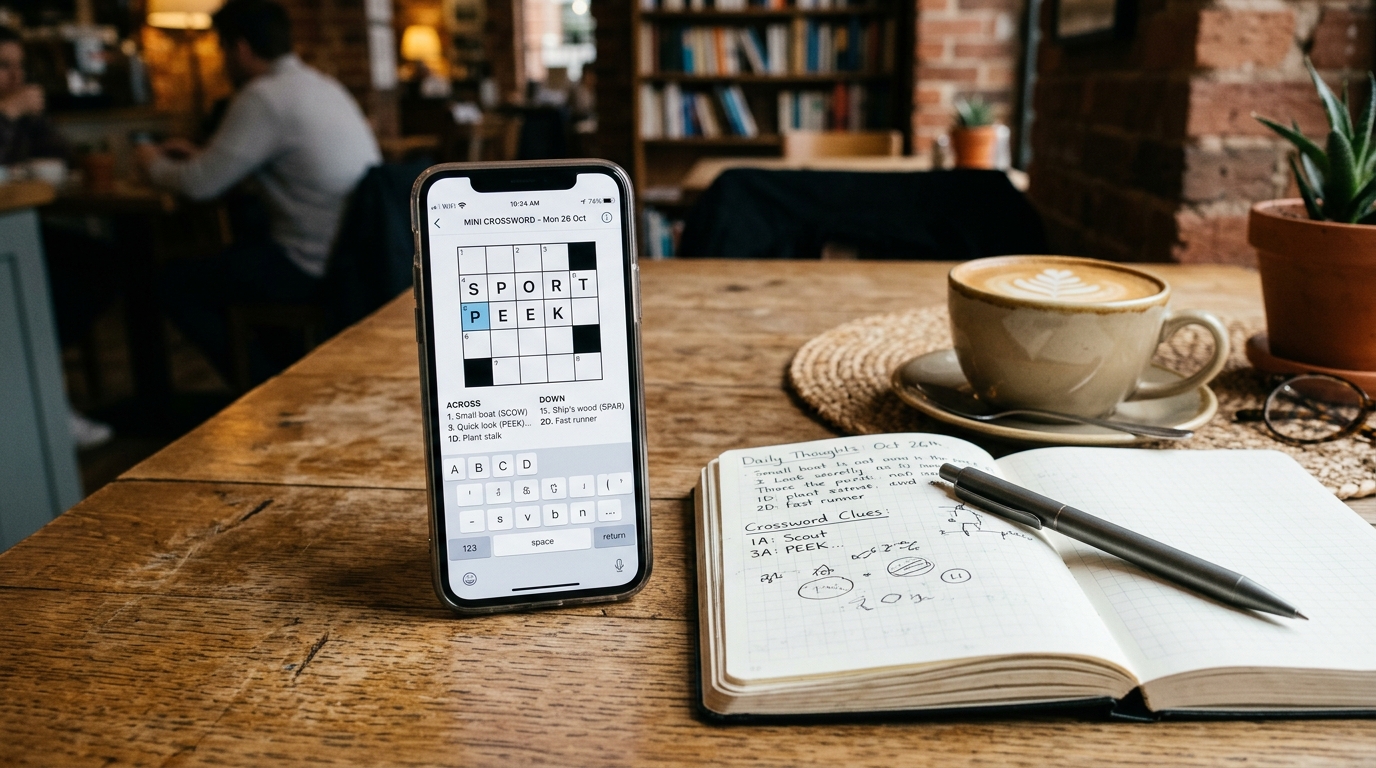
A clean, distraction-free visual presentation is essential for enjoying crossword on modern devices. The featured illustration accompanying this article has been selected to showcase the focused, calm atmosphere of deliberate play. Pairing clear visual graphics with descriptive alt text highlighting 1920s British crossword craze history ensures that solvers can comfortably connect theory with on-screen action. Whether you are playing on a high-resolution desktop monitor or a compact mobile screen, sharp contrast and thoughtful interface design keep your focus squarely on the pleasure of solving.
Taking your next step with 1920s British crossword craze history
The most enjoyable way to appreciate the power of 1920s British crossword craze history is to dive into an actual round today with these fresh insights in mind. Head over to USA Today Crossword for a relaxing, high-quality session where thoughtful strategy replaces rushed guessing. Whenever you want to expand your puzzle horizons with fresh daily challenges, explore the comprehensive Easy Daily Puzzle library for endless daily mental stimulation. Every completed puzzle is a testament to the timeless joy of clear logic, patient observation, and a well-played game.