
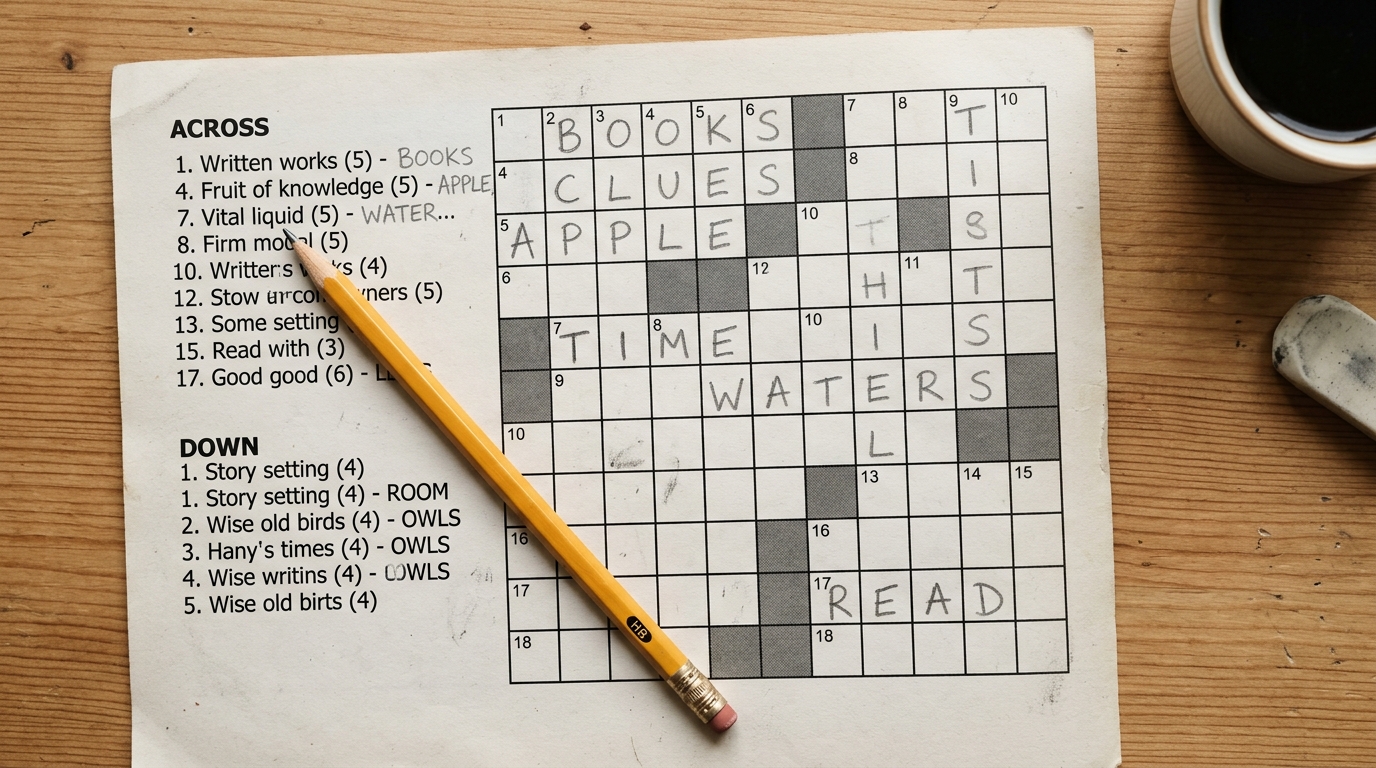
The first crossword did not arrive as a timeless tradition. It arrived as a new kind of newspaper page, asking readers to turn a list of clues into a shared shape of words. Crossword first puzzle history gives that moment a name, but the useful part is the habit behind it. The aim is not to make every move look clever. It is to make the next move easier to explain.
Why Crossword first puzzle history matters on an ordinary puzzle
Crossword first puzzle history is commonly traced to Arthur Wynne’s 1913 puzzle for the New York World. The early design was different from many modern grids, but the core pleasure was already there: clues create a set of small questions, and crossing letters let one answer test another. That combination made the format easy to print and easy to revisit. A player does not need a special setup to use this idea. It works during a short browser session, on a printed page, or in the middle of a game when attention is starting to drift.
Crossword solving also improves when you separate evidence from enthusiasm. A familiar phrase can be useful, but it is still only a candidate until its length, grammar, and crossings agree. The grid gives you several kinds of proof, and they do not all carry the same weight. A single remembered name may be shaky; a clean definition plus two independent letters is stronger. This is why experienced solvers leave a blank without embarrassment. They are saving the grid from a guess that would make the next clues harder.
The wider background is worth keeping nearby. Smithsonian crossword history offers useful context for this puzzle family, while Britannica crossword puzzle overview gives a second view of its rules or history. The sources differ in purpose, but both support the same practical lesson: a clear structure gives the player something reliable to inspect.
How to use Crossword first puzzle history without forcing it
Play an early-style grid with the same patience you would use for a modern one. Start with direct clues, use crossings to limit the uncertain answers, and notice how the grid turns separate bits of vocabulary into one connected problem. Start with a legal move and let the evidence narrow the field. If the position does not improve, stop. A good technique is a filter, not a command to keep pushing the same idea after the board has moved on.
A short routine for the next game
Keep a history note beside a daily solve. Mark one clue that feels old-fashioned, one crossing that makes the answer fair, and one design feature that still feels modern. It turns background reading into a way of seeing the grid.
- Remember the 1913 newspaper setting.
- Notice the role of connected crossings.
- Solve direct clues before chasing wordplay.
- Compare the old design with today’s daily grid.
The mistake that makes this idea feel harder
The trap is treating the first puzzle as a museum object rather than a solving design. Another mistake is assuming history makes an answer fair without checking clue length and crossings. A crossword survives because the player can still test every entry against the grid.
What to remember when the board changes
Crossword first puzzle history explains the format’s durability. The grid is a page, a game, and a conversation between answers, which is why it can move from a newspaper to a browser without losing its basic tension. That is also why Crossword first puzzle history should stay practical. Use it when it describes the board in front of you, then return to ordinary reading when the evidence changes. A puzzle is allowed to ask a different question on the next move.
If Crossword first puzzle history does not produce a move today, that is useful information too. Leave the position clean, keep the strongest clue visible, and come back after one ordinary move. Techniques become reliable through that small return: notice the signal, test it, record what changed, and stop before the idea turns into a guess. Over time, the pause becomes part of your solving rhythm rather than a sign that the puzzle has defeated you.
Keep the session concrete. Name the clue, make one reversible change, and look again. That is enough for a useful practice round, even when the puzzle is unfinished. A short note about what changed makes the next session easier to start.
For a live session, play more puzzles on usa-today-crossword.com. When you want a related example, browse related posts on this site. You can also try another daily puzzle at Easy Daily Puzzle or find more puzzle guides on Easy Daily Puzzle. Keep the next step simple: play one puzzle, try the routine once, and notice which decision became clearer.
A crossword does not need a perfect first pass. Leave the uncertain clue clean, keep the confirmed crossings in place, and let the next return happen with better evidence. That is a solving habit, not a concession.